Why a Pair of Self-Lacing Nike Mags Sold for $200,000
In the movie, the self-tying laces were a trick. When Nike finally made them work, it built only 89 pairs, and the last one went to a charity auction for $200,000.
The short version
Back to the Future Part II promised self-lacing sneakers in 1989, but on set the effect was done with strings. Nike's 2011 Mag still had to be laced by hand; the 2016 version finally tightened itself, and only 89 pairs were made. Eighty-eight went out through a $10-per-entry charity draw, and the 89th drew a $200,000 winning bid at the Michael J. Fox Foundation's gala.
The 89th pair
On November 12, 2016, at the Michael J. Fox Foundation's Fox Gala in New York, guests bid on the last available pair of the 2016 Nike Mag, the self-lacing sneaker from Back to the Future Part II. The winning bid was $200,000. The foundation described the shoes as “arguably the world's most expensive pair of sneakers.”
That price was not set on the open market. It came at a benefit auction for the foundation, and the pair was the final one of an edition of just 89. Watch the 30-second version above; here is how a movie gag turned into a $200,000 pair of shoes.
A movie gag that took decades to engineer
Back to the Future Part II, released by Universal in 1989, is partly set in what was then the far-off year of 2015, where Marty McFly's Nike Mags tighten themselves. The shoe was designed for the film by Nike designer Tinker Hatfield. But the self-lacing on screen was a practical effect. According to Nike, someone crouched out of frame and pulled the laces with strings.
Nike's first real Mag arrived in 2011, as a limited edition of 1,500 pairs auctioned for the Michael J. Fox Foundation. Nike says that release raised nearly $10 million in 10 days for Parkinson's research. It looked like the movie shoe, but it skipped the feature everyone remembered: the 2011 pairs had to be laced by hand.
The working version came next. On October 21, 2015, the date Marty travels to in the film, Michael J. Fox received the first self-lacing pair, as Dezeen reported at the time. Nike's Mark Parker described the project as starting with something made for fiction and turning it into fact. The 2016 Mag uses what Nike calls Adaptive Fit, a system that senses the wearer and tightens or loosens the laces to fit the foot.
How 89 pairs were handed out
Nike made only 89 pairs of the 2016 Mag, and it did not put them on store shelves. Instead, 88 pairs were offered through an online draw for the Michael J. Fox Foundation that ran from October 4 to 11, 2016. Each entry was a $10 donation. The foundation says the draw attracted hundreds of thousands of entries and raised $6.75 million; Nike puts the total at $6.7 million.
The 89th pair skipped the draw. It was held back for the foundation's gala in November, where it sold for $200,000. The draw spread 88 pairs across hundreds of thousands of entries. The gala did the opposite: it put a single pair in front of the foundation's supporters, where only the highest bid counted.
Why the last pair reached $200,000
Several forces stacked up. Scarcity was extreme: 89 pairs of a shoe that had been on movie screens since 1989. The cultural weight was unusual, too. The Mag was not just a sneaker but the payoff of a famous movie promise, made real by Nike's own engineers. And the setting mattered. At a charity gala, a winning bid is partly a donation, which is likely why the final pair fetched far more than later sales of the same edition on the open market.
Those later sales show the gap. In June 2017, Heritage Auctions sold a 2016 Mag in size 11, with a card signed by Tinker Hatfield, for $52,500, a result Complex reported as a record for sneakers at auction at the time. Same edition, same technology, and a far lower price, most likely because that buyer was paying for a shoe rather than also supporting a cause.
What a self-lacing shoe says about prices
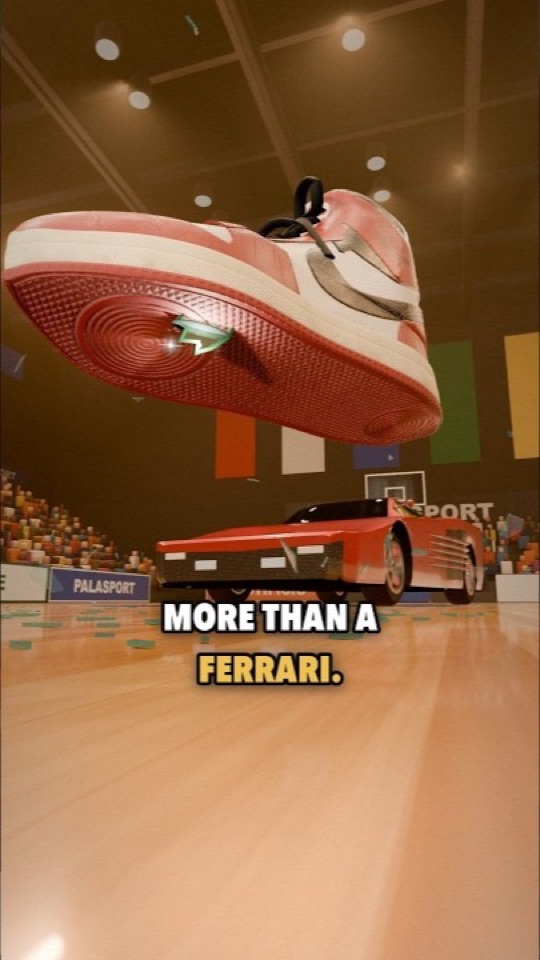
For scale, $200,000 is more than a one-kilogram gold bar was worth at the October 19, 2026, spot price of about $133,000, according to PriceGold.net. Yet the Mag's value has little to do with materials. A Sotheby's catalog lists the 2016 pair as leather, rubber, cotton, mesh, plastic and electrical components. What buyers pay for is the moment a movie gadget became real, in a quantity small enough that almost no one could own one.
The Mag also shows that one object can carry several prices at once, depending on how it is sold. A $10 raffle ticket, a charity gala and an auction house each put a different number on the same shoe. None of them is the true price on its own; each reflects who was bidding, and why.
Questions people ask
How many self-lacing Nike Mags were made?
Nike made 89 pairs of the 2016 self-lacing Mag. According to the Michael J. Fox Foundation, 88 were distributed through an online draw with $10 entries, held October 4 to 11, 2016, and the 89th was auctioned at the foundation's gala for $200,000.
Did the 2011 Nike Mag lace itself?
No. The 2011 Mag, a limited edition of 1,500 pairs auctioned for the Michael J. Fox Foundation, had to be laced by hand. Self-lacing arrived with the 2016 version and Nike's Adaptive Fit system.
Did the shoes in Back to the Future Part II really lace themselves?
No. According to Nike, the effect in the 1989 film was done by someone out of frame pulling the laces with strings.
Sources
- Fox Gala guests rock out, bid on last pair of Nike MagsMichael J. Fox Foundation · 2016-11-15
- The Draw for 2016 Nike Mag raises $6.7MMichael J. Fox Foundation · 2016-10-20
- From the Archives: The Evolution of Nike Air MagNike · 2024-09-10
- Michael J. Fox tries first pair of self-lacing Nike Air Mag shoesDezeen · 2015-10-21
- Nike Mag, Back to the Future, 2016, US 11Sotheby's · 2024-03-26
- A Pair of Nike Air Mags Sold For $52,500 at AuctionComplex · 2017-06-13
- Nike MagWikipedia · 2026-10-24
- Gold price, October 19, 2026PriceGold.net · 2026-10-19
Spotted an error? Tell us. See our editorial standards.
A new price story most days. Subscribe on YouTube so you don't miss the next one.
Subscribe