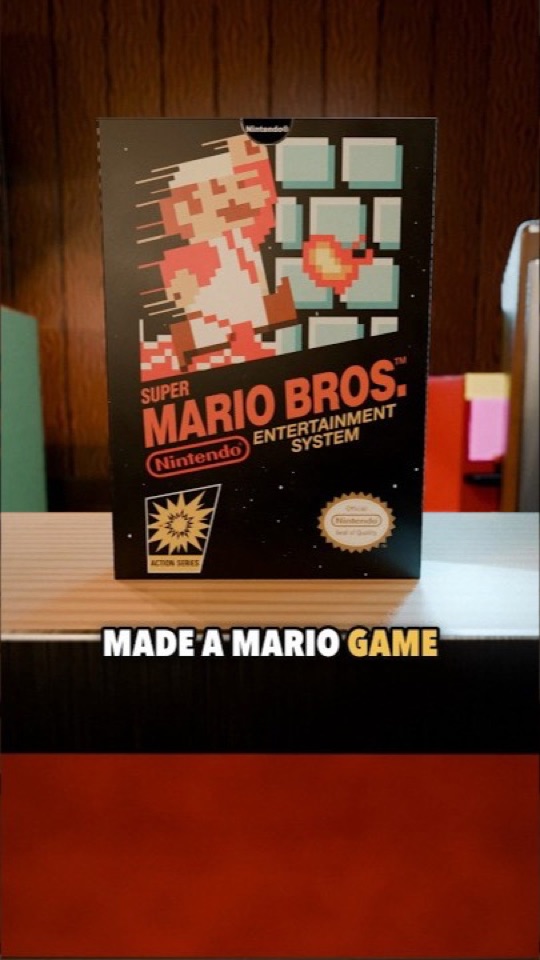
Why the Nintendo PlayStation Prototype Sold for $360,000
It looks like a Super Nintendo with a CD tray, and that is exactly what it is. The partnership that produced it collapsed in public, Sony went on to build the PlayStation alone, and a surviving prototype became the most expensive console of its kind.
The short version
In the late 1980s, Sony started building a CD drive for the Super Nintendo, and the result was a Sony-branded machine called the Play Station. A day after Sony showed it in 1991, Nintendo announced a CD deal with Philips instead, and Sony built its own PlayStation, which went on to outsell Nintendo's next console. A surviving prototype that came out of a $75 bankruptcy lot sold for $360,000 in 2020.
A Super Nintendo with a CD tray
In March 2020, Heritage Auctions in Dallas sold a prototype video game console for $360,000. That total breaks down into a $300,000 hammer price plus a 20 percent buyer's premium of $60,000. Guinness World Records lists it as the most expensive video game console sold at an online auction.
Heritage catalogued it as the Nintendo Play Station, with a space in the name. It is a Super Nintendo with a CD-ROM drive built in, and according to coverage of the sale it works: it plays Super Famicom and Super Nintendo cartridges as well as music CDs, after its CD drive was repaired ahead of the auction. No software made specifically for it is known. Press reports described it as "believed to be the only surviving prototype."
Sony pitched the drive, and Nintendo let it try
The story starts in 1988. Ken Kutaragi, a Sony engineer who had already created the Super Nintendo's sound chip, proposed adding a CD-ROM drive to the console. Nintendo was skeptical at first but allowed Sony to begin development late that year. The machine that came out of the project was a Sony-branded console called the Play Station.
Then the partnership broke in public. On June 1, 1991, Sony unveiled the device at the Summer Consumer Electronics Show in Chicago. The next day, at the same show, Nintendo announced it would put its games on compact discs with the Dutch electronics maker Philips instead. Sony was not entirely blindsided: a Nintendo spokesman had confirmed the Philips deal to the press on May 31, and according to David Sheff's 1993 book Game Over, Sony executives had learned of the press conference 48 hours ahead and were stunned.
Why Nintendo walked away
The dispute was about control. According to accounts based on Sheff's reporting, Sony's proposed agreement would have let it keep control of the CD format, called the Super Disc, and of its software licensing, with no royalties owed to Nintendo and no Nintendo approval needed for CD-ROM games. Nintendo president Hiroshi Yamauchi rejected those terms. In public, Nintendo's Howard Lincoln framed the switch as a technical decision, saying the company's engineers had concluded that working with Philips was the better option.
For Nintendo, those terms meant a new format attached to its own console could have earned money for Sony without paying Nintendo anything on the software side. That is the likely reason the deal was unacceptable, and it explains why the break was so abrupt.
Sony kept going without Nintendo and built the PlayStation on its own. Sony says the original PlayStation shipped more than 100 million units. Nintendo's next console, the Nintendo 64, sold 32.93 million units worldwide by Nintendo's own count. Both companies count units shipped to stores rather than units bought by players, but the gap is roughly three to one.
From a $75 lot to $360,000
The prototype's own path was stranger still. Advanta Corp., a US financial company, went bankrupt, and at its 2009 bankruptcy auction a man who worked in facilities maintenance there bought a lot of belongings. According to Fortune, he paid $75. Reports at the time of the sale said the console had allegedly come from a former head of Sony Computer Entertainment who later worked at Advanta, which would explain how a Sony prototype ended up among a finance company's leftovers.
Heritage said about 200 of these prototypes were reportedly made, with the rest believed destroyed. There is no official count, and the claim that this is the last one rests on the auction house. But scarcity is only part of the price. The object is physical proof of one of the best-known what-ifs in video game history: the moment Nintendo and Sony nearly shared a console, and the split that sent Sony into the business on its own. That story is what bidders were paying for.
On paper, going from $75 to $360,000 is a 4,800-fold increase, though the $75 bought a whole lot of belongings, not just the console. Watch the 30-second version above.
Questions people ask
What is the Nintendo PlayStation?
A prototype Super Nintendo with a built-in CD-ROM drive, developed by Sony for Nintendo starting in late 1988 and branded Play Station. The partnership ended in 1991, and Sony then built its own PlayStation.
How much did the Nintendo PlayStation prototype sell for?
$360,000 at Heritage Auctions in Dallas in March 2020: a $300,000 hammer price plus a $60,000 buyer's premium.
Why did Nintendo drop Sony for Philips?
According to accounts based on David Sheff's book Game Over, Sony's terms would have given it control of the CD format and its software licensing, with no royalties to Nintendo. Nintendo president Hiroshi Yamauchi rejected them, and Nintendo announced its Philips deal on June 2, 1991.
Sources
- The Weird History of the Super NES CD-ROMKotaku · 2018-09-07
- Nintendo, Philips join in games on CDThe Seattle Times · 1991-05-31
- A rare Nintendo Play Station prototype console could be the biggest video game auction item everFortune · 2020-03-05
- World's only Nintendo Playstation console sells at auction for $360,000Just Collecting · 2020-03-09
- Heritage Sells Nintendo Play Station Prototype Console For $360KOverstreet Access · 2020-03-06
- Most expensive videogame console sold at an online auctionGuinness World Records · 2020-03
- Only Nintendo PlayStation prototype sold for $360,000 at Heritage AuctionsHeritage Auctions · 2020-03
- Hardware and Software Sales UnitsNintendo Investor Relations · 2026-06-30
- PlayStation shipments press releaseSony Interactive Entertainment · 2005-06-03
Spotted an error? Tell us. See our editorial standards.
A new price story most days. Subscribe on YouTube so you don't miss the next one.
Subscribe